
Double Block and Bleed Valves: A Buyer's Checklist for Oil & Gas Projects
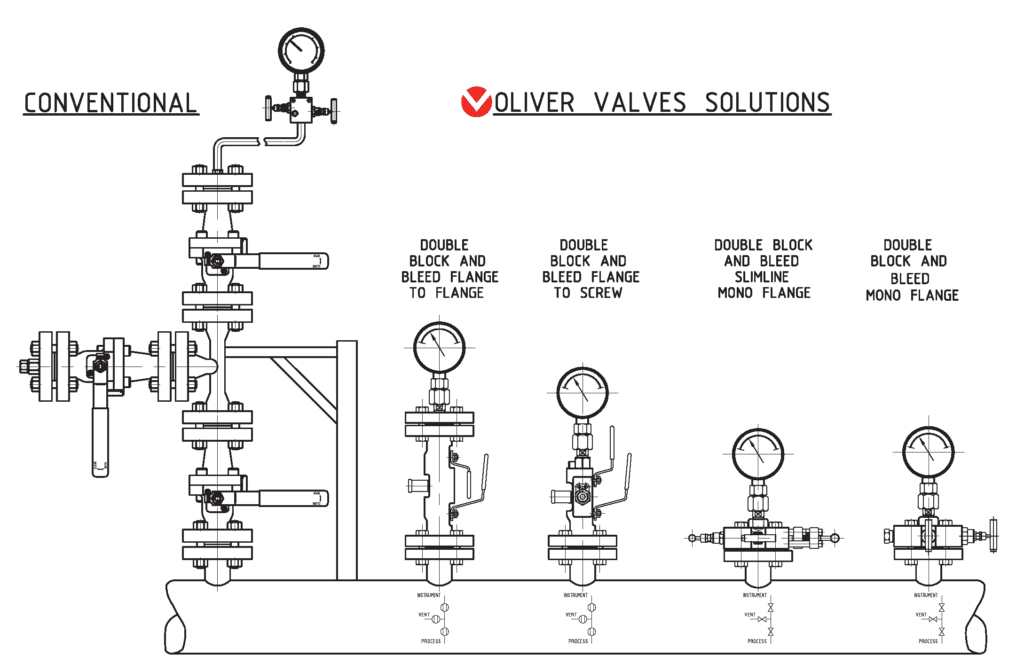
DBB valves sit at wellheads, metering skids and manifolds, where a leaking isolation valve is a safety event, not an inconvenience. Most of the problems we see in DBB enquiries are not price problems — they are specification problems that only surface after the PO is placed. This checklist covers what to pin down before you send an RFQ.
1. Design code and pressure class
Start with the code the valve must be built and tested to. In our experience, Gulf and Southeast Asian projects usually call for one of these:
- API 6D for pipeline valves, with ASME B16.34 as the pressure-boundary reference for the body.
- API 6A where the valve is part of wellhead or manifold equipment, with temperature class and material class stated separately.
- ASME Class 150–2500 as the usual pressure classes for DBB bodies; specify whether the class applies to the body, the seats, or both.
Ask for the class to be stated on the offer line by line. A vague "high pressure" in a quotation is a change order waiting to happen.
2. Bore and flow path
Floating and trunnion-mounted DBB valves behave differently: floating designs suit smaller sizes and lower torques, trunnion-mounted designs carry the seat load on a bearing and suit larger sizes and higher differential pressures. State the required bore (full or reduced) and the connection size, and confirm whether the valve must pass a pig.
3. Seat and seal materials
Soft seats (PTFE, RPTFE, PEEK, Devlon) give bubble-tight sealing at moderate temperatures. Metal-seated designs are used where fire exposure, abrasive media or very high or low temperatures rule out soft seats — this is where zero-leakage designs such as the Oliver Twinsafe range come in, with a different cost and lead time profile. Say explicitly which you need, and at what temperature.
4. Sour service and fire-safe requirements
If H2S is present, NACE MR0175 / ISO 15156 applies to the materials in contact with the process, and the offer should list the actual material specification, not just "NACE compliant" (see materials and NACE for sour service). For fire-safe duty, API 607 or ISO 10497 apply; in some projects API 6FA is specified for the valve design. These tests add cost, so they need to be priced, not assumed.
5. Testing and documentation
A DBB valve should arrive with more than a packing list. For project work, our standard package is:
- Material certificates to EN 10204 3.1
- Hydrostatic shell and seat test reports
- Fire-safe test certificate where specified
- Dimensional drawings and the bill of materials
- Certificate of origin
If your QA department needs witnessed testing or a third-party inspection (TPI) release, book it in the RFQ, not after fabrication — see how third-party inspection works.
6. Lead time and spares
Ask for the lead time to be quoted per material and per size, and ask what the spares position looks like: seat kits, seals and handles. On projects where valves are held as critical spares, this matters more than a few percent on the unit price. More on lead times, spares and minimum quantities.
How SAWYE can help
SAWYE is an Oliver Valves authorised distributor and supplies DBB valves from compact instrument patterns to full pipeline designs, in API 6D and API 6A, soft or metal seated, with the documentation package above. Send your datasheet, tag list or line list to websale@sawye.com — or use the inquiry form — and we will reply within 24 hours, with a technical offer or with the specific questions that would otherwise become change orders later.
Related: what to send in a valve enquiry · how to order · shipping and Incoterms