
The Intelligent Valve Roadmap: 5 Stages from Manual Inspection to Predictive Operations
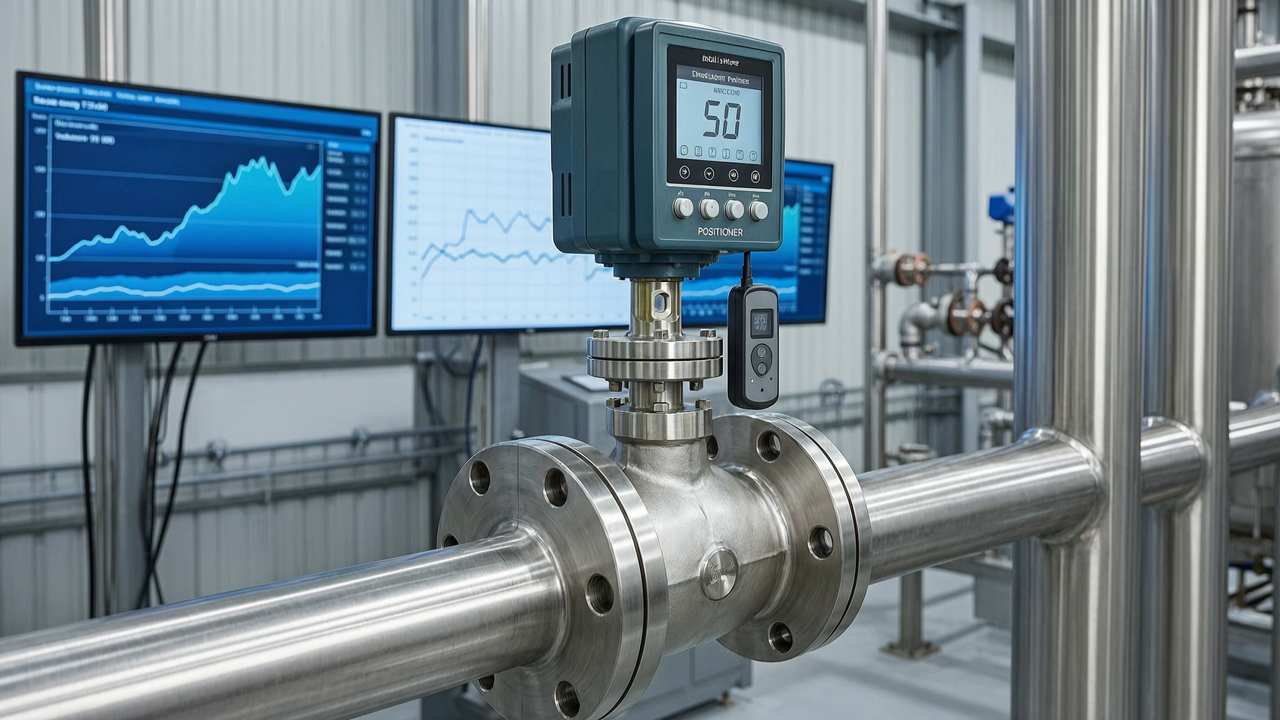
Valve intelligence rarely arrives all at once. Plants do not replace every valve with a smart one overnight — they move through stages, each delivering value on its own while preparing the ground for the next.
This is the final article in our intelligent valve series. It pulls the previous five articles into a single roadmap, so you can see where your plant sits today and what the next practical step looks like.
The Five Stages of Valve Intelligence
| Stage | What It Looks Like | What You Gain | Data Source |
|---|---|---|---|
| 0. Manual | Periodic inspection, paper records, failures discovered by operators | Baseline — but problems are found late | None |
| 1. Visibility | Wireless valve position monitoring; open/closed state proven remotely | Proof of valve state; faster loop checks; no new cabling | Position |
| 2. Control | Digital valve controllers and smart positioners report actual stem position | Diagnostics, partial stroke testing, tuning without field visits | Position + diagnostics |
| 3. Prediction | AI models analyse trends and alert before failure | Failures moved from reactive to planned; spare parts and windows scheduled | Multi-parameter trends |
| 4. System intelligence | Plant-wide monitoring: relief devices, tank safety equipment, whole loops | Process-level insight; emissions and safety compliance evidence | Assets across the site |
Most facilities today sit at Stage 0 or 1. The good news: the jump from 0 to 1 is the cheapest and the fastest — and it is usually where the payback is clearest.
Stage 1: Prove What the Valve Is Actually Doing
The starting point is not analytics. It is knowing whether a valve is open or closed, right now, without sending someone to look.
Wireless valve position monitoring does exactly that: a battery-powered discrete transmitter on the stem, reporting state over WirelessHART to a gateway. No new cable tray, no shutdown, no process penetration.
What it changes immediately:
- Loop checks that took hours now take minutes
- Operators can verify isolation before maintenance
- Stuck or drifting valves surface before they become trips
→ Read the full article: Wireless Valve Position Monitoring: The First Step Most Plants Take Toward Intelligent Operations
Stage 2: Control the Valve, Not Just Watch It
Once you can see position, the next stage is controlling and diagnosing it digitally. Digital valve controllers and smart positioners replace mechanical positioners and add continuous diagnostics:
- Actual stem position versus setpoint
- Air consumption and supply pressure trends
- Valve signature and friction trends
- Partial stroke testing of critical shut-off valves — without interrupting production
This is where maintenance planning changes shape: a valve that needs attention announces itself instead of failing during a startup.
→ Read the full article: Digital Valve Controllers & Smart Positioners: The Brain Behind Intelligent Valves
Stage 3: Move from Diagnostics to Prediction
Diagnostics tell you what is happening. Prediction tells you what is about to.
AI-powered predictive maintenance applies trend analysis and models to controller and instrument data, so degradation is caught weeks or months ahead. The practical outcomes:
- Maintenance becomes planned rather than emergency
- Spare parts and shutdown windows are prepared in advance
- Failures that would have caused unplanned downtime are prevented
Crucially, this stage does not require a greenfield plant — it requires history. Which means the sooner Stages 1 and 2 are in place, the sooner prediction becomes possible.
→ Read the full article: AI-Powered Valve Predictive Maintenance: Stop Failures Before They Happen
Stage 4: Extend Intelligence Beyond the Control Valve
The same wireless platform that monitors valves can monitor the equipment around them — including the safety devices that are easiest to forget.
Tank safety equipment is the clearest example: pressure/vacuum relief valves, breather valves and flame arresters that sit untouched for years. With wireless position and pressure monitoring, operators can prove reseating after each relief event, detect leakage, and satisfy emissions requirements with evidence rather than assumption.
→ Read the full article: Smart Tank Safety: Wireless Monitoring for Breather Valves, Flame Arresters and PVRVs
Where to Start: A Practical Path
If you are at Stage 0, the recommended sequence is:
- Pick one problem loop — one where valve state uncertainty actually costs you time.
- Retrofit wireless position monitoring — no shutdown, no cabling, battery life measured in years.
- Add a digital controller on the most critical control valve in that loop.
- Collect 6–12 months of trend data before buying analytics — you cannot predict without history.
- Then extend to predictive analytics and to adjacent assets such as tank safety equipment.
Three pitfalls worth avoiding:
- ❌ Buying analytics first. Without instrumented valves, there is nothing to analyse.
- ❌ Instrumenting everything at once. Start where the pain is, prove the value, then expand.
- ❌ Treating it as an IT project. The value comes from maintenance and operations teams acting on the data.
Why It Matters Now
Three pressures are pushing valve intelligence from “interesting” to “expected”:
- Safety and emissions compliance — documented proof of device condition rather than periodic assumptions
- Skilled labour shortage — fewer people to walk down loops; monitoring replaces rounds
- Uptime economics — unplanned downtime is far more expensive than the instrumentation that prevents it
The Series in One Place
- The Intelligent Valve Revolution: How Smart Valves Are Transforming Oil & Gas Operations — the overview
- Wireless Valve Position Monitoring: The First Step Most Plants Take Toward Intelligent Operations — Stage 1
- Digital Valve Controllers & Smart Positioners: The Brain Behind Intelligent Valves — Stage 2
- AI-Powered Valve Predictive Maintenance: Stop Failures Before They Happen — Stage 3
- Smart Tank Safety: Wireless Monitoring for Breather Valves, Flame Arresters and PVRVs — Stage 4
How SAWYE Can Help
SAWYE supplies valve and instrumentation solutions for oil & gas operators — from certified OLIVER valves and instrumentation to the wireless monitoring layer that turns them into managed assets.
Whether you are planning a first wireless retrofit or extending monitoring across a tank farm, our team can help you define the scope and the right starting point.
📧 Send Inquiry → websale@sawye.com
🌐 Visit → www.sawye.com
SAWYE — Authorized Distributor of Oliver Valves. 30 years of oil & gas equipment expertise across the Middle East and Southeast Asia.